Space Discoveries in 2026 That Affect Your Daily Life
Table of Contents — Space Discoveries in 2026 That Affect Your Daily Life
- Why Space Discoveries Matter on Earth
- Solar Activity and Your Technology
- Satellites That Run Your World
- Weather Forecasting Gets Better
- What We're Learning From Mars
- Asteroids: Watching the Skies
- Space Internet Changes Everything
- Common Questions
Why Space Discoveries Matter on Earth
Space seems far away. Distant planets, stars you can't touch, mysteries that don't affect your morning commute.
But that's not quite true.
Space discoveries shape your daily life more than you might think. The GPS in your phone uses satellites. Weather forecasts come from space data. Solar activity affects power grids and communications. Even your internet might soon come from orbit.
In 2026, space research is producing breakthroughs that touch everyday technology, energy systems, and how we understand our planet. This guide explains what's happening up there and why it matters down here.
Solar Activity and Your Technology
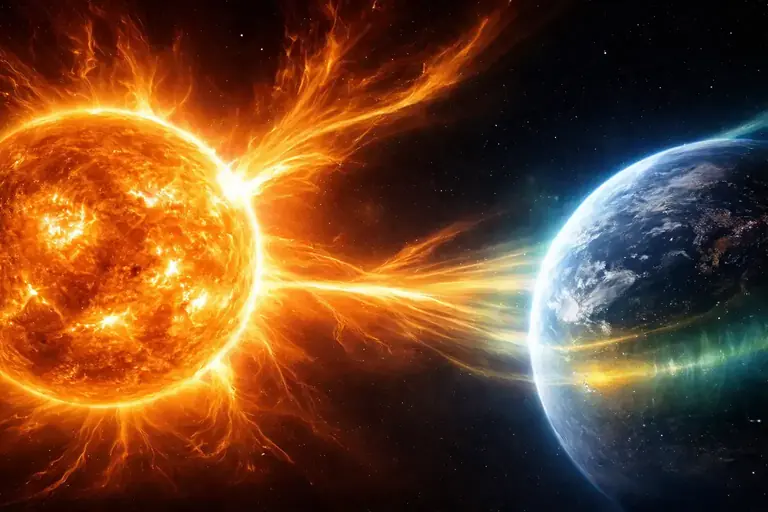
The Sun isn't just a ball of light. It's a giant nuclear reactor that occasionally throws tantrums.
What Solar Activity Means
The Sun goes through cycles of more and less activity. Right now, we're near a "solar maximum" — a period of increased solar flares and coronal mass ejections.
In plain English: the Sun is shooting more stuff at Earth than usual.
Most of this stuff gets blocked by Earth's magnetic field. But some gets through, and that causes problems.
How It Affects You
GPS accuracy. Solar activity messes with the signals GPS satellites send. Your phone might be a few meters off instead of a few centimeters. Usually not a big deal. But for planes landing in fog or self-driving cars, it matters.
Power grids. Strong solar storms can induce currents in long power lines. This has caused blackouts before (Quebec, 1989). Grid operators now monitor space weather and take precautions.
Communications. High-frequency radio can be disrupted. Satellite communications can have glitches. Usually temporary, but annoying.
Aviation. Pilots flying polar routes (where protection from Earth's magnetic field is weaker) may need to reroute during solar storms. This adds flight time and fuel costs.
The Numbers
Scientists measure solar activity using the "Kp index" — a scale from 0 to 9.
At Kp 5 or above, you might notice GPS drift. At Kp 7 or above, power grids start taking defensive measures. At Kp 9, major disruptions are possible.
You can check current space weather at spaceweather.com. In 2026, forecasting has improved significantly — we often get 1-3 days warning before major events.
Use the Scientific Calculator if you want to work with any of these numbers yourself.
Satellites That Run Your World
More than 10,000 active satellites orbit Earth right now. They do things you use every day.
Navigation
GPS, Galileo, GLONASS — these satellite systems tell your phone where you are. They guide planes, ships, cars, and delivery drivers.
Modern GPS is accurate to about 1-2 meters for phones, much better for specialised equipment. That accuracy depends on good satellite data and corrections for atmospheric interference.
Communications
Satellite TV, satellite phones, ship communications, emergency beacons — all depend on spacecraft.
The newest development: satellite internet from low Earth orbit (more on this below).
Weather
Weather satellites photograph Earth constantly. They track storms, measure temperatures, monitor ocean currents, and watch ice sheets.
Without them, weather forecasts would be much worse. Your 5-day forecast exists because satellites see weather systems developing across oceans.
Earth Observation
Satellites monitor:
- Crop health (helping farmers)
- Deforestation (tracking environmental change)
- City growth (urban planning)
- Disaster damage (emergency response)
- Ocean conditions (fishing, shipping)
This data feeds into countless decisions that affect food prices, insurance costs, and policy.
The Growing Problem
More satellites mean more potential collisions. Space debris is a real concern. One collision creates thousands of fragments, each capable of destroying another satellite.
Space agencies are working on debris removal and collision avoidance. But it's a growing challenge as satellite numbers increase.
Weather Forecasting Gets Better
Weather prediction has improved dramatically, partly thanks to better space observations.
How Space Helps
Satellites see weather that ground stations can't:
- Hurricanes forming over oceans
- Cold fronts moving across continents
- Jet stream patterns affecting regional weather
- Moisture in the atmosphere
This data feeds into computer models that predict future weather.
2026 Improvements
Recent advances include:
- More frequent satellite images (every 10 minutes instead of every hour)
- Better measurement of atmospheric moisture
- Improved hurricane intensity predictions
- Better long-range forecasting (10-14 days out)
Why This Matters to You
Better forecasts mean:
- More warning before severe weather
- Better travel planning
- More efficient agriculture (farmers plant and harvest at better times)
- Energy companies predict demand more accurately
- Insurance companies assess risk better
When the forecast says "rain tomorrow," it's right more often than it used to be. That's satellites and supercomputers working together.
What We're Learning From Mars
Mars research might seem irrelevant to daily life. But it's producing useful knowledge.
Better Understanding of Atmospheres
Studying Mars's thin atmosphere helps scientists understand Earth's atmosphere better. Climate models improve when tested against other planets.
Mars also had liquid water in the past but lost it. Understanding why helps us understand Earth's future.
Technology Spinoffs
Mars rovers need to:
- Navigate autonomously
- Survive extreme temperatures
- Operate on minimal power
- Communicate across vast distances
- Repair themselves when possible
Technology developed for these challenges finds uses on Earth:
- Better autonomous vehicles
- More efficient solar panels
- Improved batteries
- Advanced communications
- Remote diagnostics
Inspiring Future Scientists
Mars missions capture public imagination. Kids who watch rovers exploring another planet become engineers and scientists. That human capital matters for future innovation.
Your Mars Age
If you're curious how old you'd be on Mars, use the Age on Mars Calculator. A 30-year-old on Earth is only about 16 in Mars years.
The Space Weight Calculator shows what you'd weigh on Mars — about 38% of your Earth weight.
Asteroids: Watching the Skies
Asteroids are rocks floating in space. Most are harmless. A few could cause problems.
Why We Track Them
Asteroid impacts have caused mass extinctions before. The dinosaurs are the famous example. Smaller impacts happen more often — the 2013 Chelyabinsk meteor injured over 1,000 people in Russia.
Scientists now track thousands of asteroids, calculating which might come close to Earth.
2026 Progress
Asteroid detection has improved significantly:
- More telescopes watching the sky
- Better software to spot moving objects
- AI helping identify potential threats
- More accurate orbit predictions
We now know about most large asteroids (civilization-ending size). The focus has shifted to smaller but still dangerous objects.
What We Could Do
If an asteroid were heading for Earth, we'd have options:
- Push it off course (NASA's DART mission demonstrated this works)
- Evacuate the impact area for smaller objects
- Years of warning for most threatening objects
The good news: no known asteroids threaten Earth in the foreseeable future. We're watching, and we have time to act if something changes.
The Numbers
Scientists estimate impact probability using orbital calculations. Most "near Earth" asteroids pass millions of kilometers away — "near" in space terms is still very far in human terms.
The Scientific Calculator can help you work with astronomical distances if you're curious.
Space Internet Changes Everything
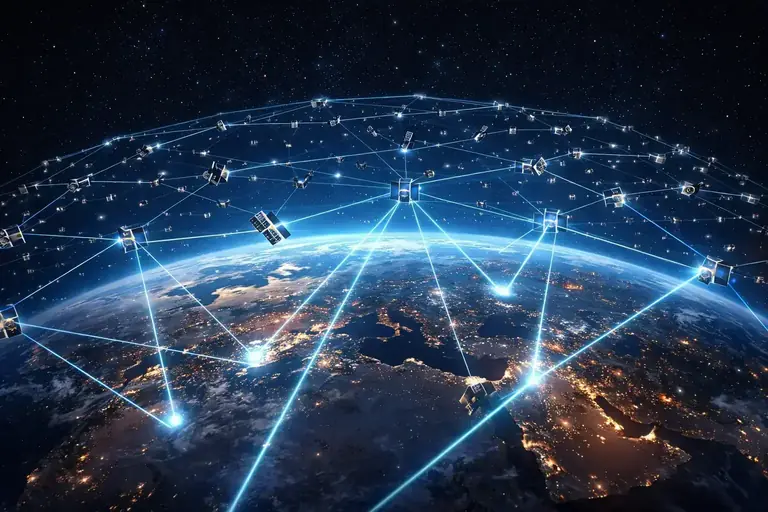
This might be the space development that affects most people directly.
What's Happening
Companies like SpaceX (Starlink), Amazon (Kuiper), and others are launching thousands of small satellites into low Earth orbit. These satellites provide internet service to anywhere on Earth.
Why It's Different
Traditional internet requires cables or cell towers. Rural areas, ships, planes, and remote regions have limited options.
Satellite internet exists already but was slow and expensive (satellites were far away).
Low Earth orbit satellites are much closer — a few hundred kilometers up instead of 36,000. This means:
- Much lower latency (delay)
- Faster speeds
- Smaller, cheaper ground equipment
Real-World Impact
Rural connectivity. Farms, villages, and remote homes can get broadband internet. This affects education, healthcare, business, and quality of life for millions.
Aviation and maritime. Planes and ships get reliable, fast internet. Passengers stream video. Crews communicate easily.
Disaster response. When earthquakes or storms destroy ground infrastructure, satellite internet keeps working.
Global competition. Countries with poor internet infrastructure can leapfrog old technology.
The Latency Calculation
Light travels at about 300,000 km/second. A satellite 550 km up means signals travel about 1,100 km round trip minimum.
Latency ≈ 2 × (550,000 meters / 300,000,000 meters per second) ≈ 3.7 milliseconds
Add processing time and you get roughly 20-50 milliseconds total latency — similar to cable internet and much better than old satellite systems (600+ milliseconds).
Common Questions
Do solar flares affect my phone directly?
Usually no. Solar flares might affect GPS accuracy by a few meters or cause brief communication glitches. Your phone will still work. Severe storms might cause more noticeable issues, but they're rare.
Should I worry about asteroid impacts?
No. Scientists track threatening objects and would give years of warning for anything large. The risk is real but managed. It's not something to lose sleep over.
Will space internet replace cable and fibre?
For some people, yes — especially those without good existing options. For cities with fibre, ground-based internet will likely stay faster and cheaper. Space internet is a complement, not a replacement.
How does space weather affect flights?
Mostly it doesn't. During severe solar storms, some polar routes might be rerouted, adding flight time. Airlines monitor space weather and adjust as needed. Passengers rarely notice.
Are satellites visible from Earth?
Yes. Satellite "trains" (especially Starlink) are visible shortly after launch. They spread out over time and become dimmer. You can track visible satellite passes with apps like "Heavens Above."
Does space research justify its cost?
Economic analyses generally find that space investment returns much more than it costs through technology spinoffs, commercial applications, and scientific knowledge. GPS alone generates trillions in economic value globally.
What's the next big space development to watch?
Several things: more powerful space telescopes finding Earth-like planets, potential return to the Moon with astronauts, commercial space stations, and continued Mars exploration. Space activity is accelerating.
Why It All Matters
Space discoveries might seem abstract, but they're woven into daily life:
- Your phone finds your location using satellites
- Your weather app gets data from space
- Your internet might soon come from orbit
- Scientists watch for asteroids that could threaten Earth
- Solar weather affects power grids and communications
In 2026, these connections are becoming more visible. Space isn't just for astronauts and scientists. It's infrastructure that modern life depends on.
Understanding these systems helps you make sense of the news, appreciate the technology you use, and stay informed about changes that might affect you.
Space is closer than you think.
Related Tools
- Age on Mars Calculator — Your age on the Red Planet
- Space Weight Calculator — Weight across the solar system
- Scientific Calculator — For astronomical calculations
- Time Calculator — Work with time and dates